U.S. Patent Applications
How to Choose Plastic Clamshells for Global Packaging?
Choosing plastic clamshells for global packaging is more than selecting a clear container. It is a decision about protection, presentation, transport, and compliance. A clamshell may protect a small electronic accessory during a humid sea voyage, yet crack under cold warehouse conditions. The right design should match the product’s weight, sharp edges, shelf position, and opening needs. It should also support efficient packing without wasting material. In practice, attractive packaging can still fail if the hinge breaks or the seal frustrates customers.
This guide approaches the choice from a practical packaging perspective. It examines material options, wall thickness, cavity dimensions, closure styles, tamper evidence, and labeling space. It also considers recycled content, recyclability, tooling costs, and shipping volume. These details matter. A supplier’s drawing is useful, but samples reveal more. Check fit by hand. Run compression, drop, vibration, and temperature tests where appropriate. Record the results, even when they are disappointing.
Global distribution adds another layer of responsibility. Packaging teams should verify current requirements in each target market, especially for recycling marks, chemicals, food contact, and consumer safety. Requirements can change. Supplier declarations and test reports should be specific, traceable, and easy to review. No single plastic clamshell suits every product or country. A balanced choice may cost more initially, but reduce damage, returns, and waste later. Still, every assumption deserves a second look. That is where dependable packaging decisions begin.
What Are Plastic Clamshells and How Are They Used?
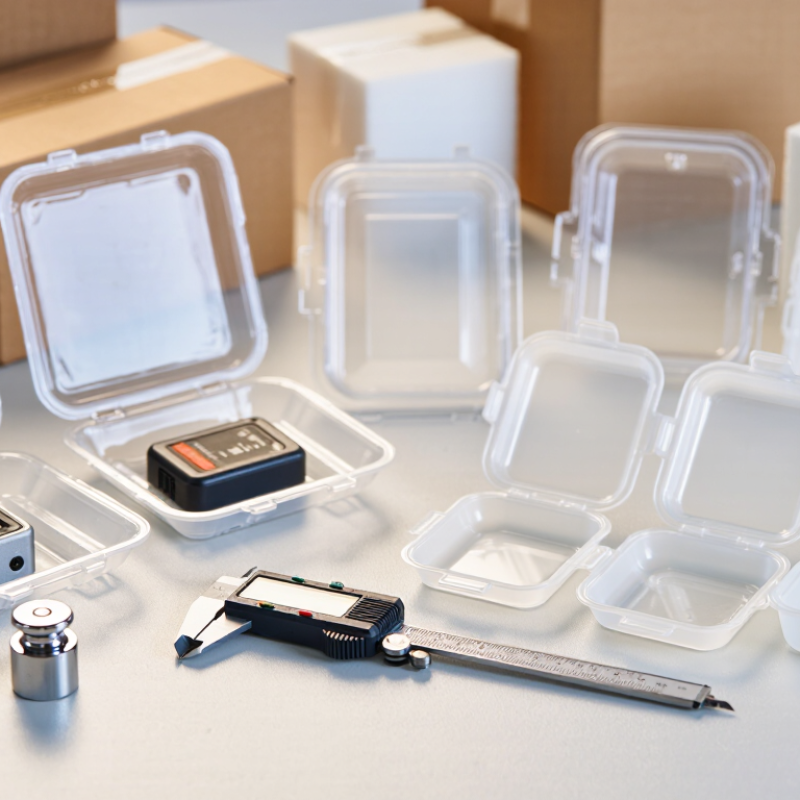
A plastic clamshell is a clear container with a hinged lid that closes around a product. It is usually thermoformed from PET, recycled PET, or polypropylene. The shape gives buyers a direct view of the contents. Its attached lid also reduces loose parts during handling. Small locking tabs can improve tamper evidence and shelf security. Some designs include ventilation holes for fresh produce or baked goods.
In retail, clamshells protect berries, salad ingredients, toys, small electronics, craft items, and hardware. They help prevent crushing, dust, moisture, and careless handling. I have found that product shape should guide the package design, not the other way around. A sharp edge may require an inner clearance zone. A heavy item may need reinforced hinges and a stronger locking point. Poor fit creates movement inside the pack.
Material selection also affects recycling and market acceptance. Clear PET is widely recognized, but local collection systems still differ. Recycled content can reduce virgin plastic use, though clarity and strength may change slightly. This detail is easy to overlook. Packaging teams should check food-contact requirements, labeling rules, closure performance, and transport testing for each destination. I once reviewed a package that looked excellent on a store shelf but opened during vibration testing. Appearance alone is not proof of reliability. A better evaluation includes drop tests, temperature exposure, seal checks, and feedback from actual users.
Which Product, Size, and Shape Requirements Should You Assess?
Choosing plastic clamshells begins with the product, not the mold. Assess weight, breakability, surface sensitivity, and opening requirements. A sharp edge may need a deeper cavity. A lightweight item may need ribs instead. Measure the product at its widest points, including labels and protective inserts. Small errors can create pressure marks.
Size decisions should include clearance, wall thickness, nesting, and shipping efficiency. Leave enough space for product movement, but avoid an oversized cavity. It increases material use and may reduce pallet stability. PlasticsEurope reports that packaging represented 39.6% of European plastics demand in 2022. That figure makes material discipline important. Test filled clamshells through stacking, vibration, drop, and temperature cycles. Laboratory results help, but real handling can expose weaknesses. The first draft is rarely right.
Shape should match both protection and retail presentation. A flat clamshell suits thin products and saves shelf space. A dome protects raised components, while a hanging hole supports peg displays. Hinged designs improve usability, but the hinge needs repeated opening tests. Check sealing surfaces carefully. Poor alignment can cause gaps or excessive force. The OECD Global Plastics Outlook reported that only 9% of global plastic waste was recycled in 2019. Therefore, assess material identification, unnecessary components, and regional recycling access before finalizing the design. A visually attractive shape may still be a poor global choice.
How Do You Compare Clamshell Materials and Manufacturing Options?
Choosing plastic clamshells starts with the product, not the mold. PET offers strong clarity and a crisp shelf appearance. Recycled PET can reduce virgin plastic use, but its color and consistency may vary. PP handles moderate heat better and resists cracking during transport. PVC may offer low material costs, yet recycling access and regional acceptance can be limited. Check the destination market before selecting it.
Manufacturing methods change both performance and cost. Thermoforming suits larger volumes and shallow, repeatable shapes. It can produce thin walls, but sharp corners may weaken during drops. Injection molding supports precise hinges, locking tabs, and deeper designs. However, tooling usually requires more investment and longer preparation. Measure wall thickness at corners, not only across flat panels. Small differences can affect sealing and product protection.
Run practical trials with the actual product inside. Test stacking, humidity, temperature changes, and repeated opening. A package that looks rigid may still split near its hinge. Ask suppliers for material specifications, recycled-content records, and quality-control data. Confirm dimensions with samples from several production runs. No option is perfect. I have seen clear packages fail because the closure was tested only by hand. Design reviews should include operators, logistics teams, and local recycling requirements.
How to Choose Plastic Clamshells for Global Packaging? – Comparing Clamshell Materials and Manufacturing Options
| Material / Option | Typical Manufacturing Method | Clarity & Appearance | Protection & Performance | Typical Temperature Considerations | Recycling or End-of-Life Considerations | Relative Cost | Best-Fit Applications | Global Packaging Notes |
|---|---|---|---|---|---|---|---|---|
| Virgin PET | Roll-fed or sheet-fed thermoforming; die cutting, folding, and heat or ultrasonic sealing may be added. | ★★★★★ Excellent transparency and strong surface gloss. |
Good impact resistance, stiffness, dimensional stability, and resistance to many common oils and diluted chemicals. Suitable for high-visibility retail packaging. | Generally suitable for ambient applications. Softening and forming behavior must be checked for hot-fill, sterilization, or elevated-temperature use. | Widely accepted in many rigid-plastic recycling systems where PET packaging is collected and sorted. The package should avoid unnecessary materials, dark pigments, and difficult-to-remove components. | Medium | Electronics accessories, tools, hardware, personal-care items, food-contact products, and products requiring strong shelf visibility. | Confirm food-contact compliance, labeling rules, recycling marks, and applicable extended-producer-responsibility requirements in each destination market. |
| Recycled PET (rPET) | Thermoforming from recycled-content sheet; may use a multilayer structure with virgin PET for appearance or performance control. | ★★★★☆ Usually clear, but color, haze, and batch variation can be higher than with virgin PET. |
Often provides performance close to PET, although impact strength, color, and consistency depend on feedstock quality and the recycled-content percentage. | Use the same thermal design checks as PET. Processing history can affect shrinkage and forming consistency. | Supports recycled-content goals and can remain compatible with PET recycling when the construction is properly designed. Recycled-content claims require evidence and market-specific substantiation. | Medium to high | Retail packaging where recycled content, lower reliance on virgin resin, and clear product presentation are priorities. | Availability and quality differ by region. Verify chain-of-custody documentation, recycled-content regulations, and local collection infrastructure. |
| PVC | Thermoforming from rigid PVC sheet; folding and mechanical or heat sealing can be incorporated. | ★★★★☆ Good clarity and gloss, with strong print and graphics compatibility. |
Good stiffness and moderate impact performance. Can be useful for rigid display packaging, but formulation and additives affect final properties. | Suitable for many ambient products. Temperature limits, plasticizer migration, and exposure to heat should be evaluated for the specific grade. | Collection and recycling options are more limited and vary significantly by country. PVC can create sorting or processing concerns when mixed with other rigid plastics. | Low to medium | Display packaging, stationery, small household items, and products where cost and printed presentation are important. | Check destination-market restrictions, retailer requirements, chemical regulations, and local recycling acceptance before selecting PVC for international distribution. |
| Polypropylene (PP) | Thermoforming for thin-wall packages; injection molding for thicker, reusable, or highly detailed parts; living hinges can be molded into PP. | ★★★☆☆ Usually translucent to clear rather than as optically clear as PET; clarity depends on grade and processing. |
Good fatigue resistance, chemical resistance, and moisture resistance. Lower density than PET can reduce material mass for an equivalent volume, but stiffness must be designed carefully. | Higher heat resistance than PET in many applications; exact limits depend on grade, wall thickness, load, and exposure time. | Recycling availability is growing but remains location-dependent. Use a compatible mono-material design where possible and verify acceptance by local systems. | Medium | Reusable clamshells, moisture-sensitive products, household goods, food packaging, and applications requiring a hinge or repeated opening. | Useful for markets with established PP collection. Confirm food-contact rules and cold-temperature impact performance for refrigerated or frozen supply chains. |
| Polylactic Acid (PLA) | Thermoforming from PLA sheet; usually selected for specific compostable-packaging programs rather than general-purpose clamshell use. | ★★★★☆ Good clarity and a natural, glossy appearance in suitable grades. |
Rigid and visually attractive, but generally less tolerant of heat and impact than PET or PP. Moisture and shelf-life requirements must be evaluated. | Lower heat resistance than conventional PET and PP unless a heat-resistant grade and suitable process are used. Not appropriate for uncontrolled high-temperature exposure. | Industrial compostability is facility- and certification-dependent; it does not mean the package will break down in ordinary soil, home compost, or the marine environment. | Medium to high | Short-life products, events, produce, and packaging systems linked to verified industrial-composting infrastructure. | Use only where collection, composting access, certification, labeling, and local claims requirements are aligned. Do not assume compostable packaging is recyclable with PET. |
| Mono-Material PET Clamshell | Single-polymer thermoforming, integral hinge design, and heat, ultrasonic, or mechanical closure depending on the product. | ★★★★★ High visibility with simplified material construction. |
Good balance of stiffness, clarity, tamper resistance, and product protection. Design can reduce components that interfere with sorting. | Ambient-temperature performance is generally strong; validate sealing, hinge fatigue, and dimensional stability under distribution conditions. | Usually easier to identify and sort than a package combining several incompatible plastics. Labels, inks, adhesives, and closures should also be evaluated. | Medium | Retail products requiring visibility, tamper evidence, and a recycling-oriented package design. | A strong default for many global programs, but recyclability is never guaranteed without checking local collection and sorting systems. |
| Thermoforming | Heated plastic sheet is formed over a mold using vacuum, pressure, or both, then trimmed and assembled. | Excellent for broad, shallow, and moderately deep shapes; surface quality follows sheet and mold quality. | Efficient for lightweight packages and large visible areas. Wall-thickness distribution, corner thinning, draft angles, and webbing must be controlled during design. | Material-specific forming temperatures and cooling conditions are critical. Production parts should be tested after forming rather than judged only from flat-sheet data. | Can support lightweighting and mono-material construction. Trim scrap may be recyclable in controlled manufacturing systems, depending on material and contamination. | Low to medium tooling cost; efficient for medium and high volumes | Retail clamshells, blister-style packages, trays, inserts, and products with relatively shallow or moderate cavity depths. | Often suitable for regional or multi-country production because tooling and equipment can be scaled without the very high mold cost of complex injection molding. |
| Injection Molding | Molten plastic is injected into a precision mold and cooled before ejection; hinges, ribs, locks, and detailed features can be integrated. | Very good repeatability and surface detail; optical appearance depends on resin, mold finish, and process control. | Excellent dimensional accuracy and structural integration. Appropriate for thicker reusable clamshells and complex closures, but usually uses more rigid material than thin thermoformed packs. | Material shrinkage, mold temperature, cycle time, and post-mold distortion must be controlled. Final performance depends strongly on part geometry. | Single-material injection-molded designs can be recycling-friendly, but inserts, overmolding, coatings, and mixed polymers may complicate sorting and processing. | High tooling cost; low unit cost at high volumes | Reusable cases, precision-fit packaging, hinged containers, and products requiring integrated locks or repeated opening. | Best suited to stable, high-volume programs where tooling can be amortized across a large production run or multiple markets. |
| Heat Sealing | A coated or compatible sealing layer is softened by controlled heat and pressure to join the package components. | Can provide a clean, tamper-evident finish when temperature, dwell time, and pressure are properly controlled. | Strong seal integrity is possible, but seal performance depends on material compatibility, contamination control, seal width, and package geometry. | Sealing windows vary by material and coating. Excessive heat can deform the clamshell or damage the product. | Additional coatings or dissimilar sealing layers may complicate recycling. A compatible sealing layer or mechanical closure can simplify end-of-life design. | Medium | Tamper-evident retail packages, food packaging, medical or hygiene products, and applications requiring a permanent closure. | Validate seal performance after humidity, temperature cycling, altitude changes, and transportation testing across intended regions. |
| Ultrasonic Welding | High-frequency mechanical vibrations generate localized heat at a designed joint to bond compatible plastic parts. | Clean appearance with limited external adhesive residue when the joint is correctly designed. | Can create repeatable, tamper-resistant joints and is useful where adhesives are undesirable. Joint design and energy-director geometry are essential. | Generates localized heat, reducing overall thermal exposure, but the part must tolerate vibration and local temperature rise. | Works best with compatible mono-material parts. Mixed-polymer joints may reduce recyclability and should be evaluated as part of the complete package. | Medium to high equipment investment; efficient in repeat production | Rigid clamshells, technical products, reusable packages, and assemblies requiring clean, adhesive-free joining. | Requires controlled equipment, tooling, and process validation; regional suppliers should demonstrate consistent weld strength and dimensional capability. |
What Global Standards and Sustainability Factors Must You Check?
Choosing plastic clamshells for global packaging starts with destination markets, not appearance. A clear shell can look identical while its legal status changes across borders. Check the intended product, temperature range, and contact conditions. Food-contact packaging may require migration testing and documentation under the importing region’s rules. Electrical or cosmetic products may follow different chemical and labeling requirements. Ask suppliers for current declarations, test methods, and batch traceability. Do not accept a certificate without its scope.
Material selection deserves equal scrutiny. PET and recycled PET can support transparency and recovery, but recycled content must be verified. Request evidence of post-consumer content, contamination controls, and chain-of-custody records. Evaluate thickness, hinge strength, closure force, and transport damage together. A lighter shell is not automatically more sustainable if it cracks during shipping. Test filled samples through drops, compression, heat, and humidity. Small details matter. A label covering most of the surface may reduce sorting accuracy.
Review recognized packaging and environmental frameworks, including ISO 18601-series guidance where applicable, plus local recycling symbols and extended producer responsibility obligations. Requirements differ widely. Do not print “recyclable” until the actual market accepts the structure, adhesive, label, and color. Claims need evidence. A practical audit may expose weak points: mixed polymers, unclear instructions, or recycled resin with inconsistent quality. I would also challenge my own specification. Did we choose a clamshell for protection, or simply because it looks premium? That question can prevent unnecessary material use. Then document decisions for buyers, inspectors, and future redesigns.
How Can You Evaluate Suppliers, Costs, and Shipping Performance?
How to Choose Plastic Clamshells for Global Packaging?
A reliable supplier should provide clear material specifications, sample approvals, and production records. Ask whether the clamshell uses recycled content, virgin resin, or a controlled blend. The answer affects strength, clarity, sealing, and recycling expectations. Request samples from different production batches, not only polished samples. Check hinge movement, edge sharpness, closure force, and fit around the product. Small defects become expensive when millions of units reach packing lines.
Compare costs beyond the quoted unit price. Include tooling, mold maintenance, artwork changes, inspection, cartons, pallets, and export documentation. A low quote may hide costly minimum orders or weak quality controls. Review payment terms and replacement policies carefully. Supplier audits should examine equipment maintenance, worker training, traceability, and corrective-action records. Test reports help, but they do not replace physical inspection. A document can be accurate and still describe an outdated process.
Shipping performance needs measurable evidence. Request historical lead times, on-time shipment rates, carton dimensions, pallet patterns, and loading photos. Confirm how the supplier protects clamshells from crushing during humid ocean transport. Calculate container utilization before approving the design. One extra centimeter per carton can waste substantial space. I have seen planning spreadsheets look precise while ignoring port delays and seasonal congestion. That mistake is easy to repeat. Build a small buffer, monitor the first shipments closely, and compare promised delivery dates with actual receiving records.
Related Posts
-
China Top Plastic Clamshell Containers Manufacturers
-
10 Tips for Choosing Plastic Clamshell Containers
-
China Top 10 Uses for Clear Clamshell Containers in Everyday Life?
-
Top Tips for Sourcing Clamshell Containers Wholesale?
-
2026 Best Small Clamshell Containers for Your Business Needs?
-
Why Choose Clear Plastic Clamshell Containers for Your Packaging Needs?