U.S. Patent Applications
How to Choose the Right Egg Carton for Your Business?
Choosing the right egg carton can shape product safety, customer trust, and daily operating costs. It is not merely a container for twelve eggs. The carton must protect fragile shells, support efficient transport, and present your brand clearly on crowded shelves.
Begin with your actual selling conditions. A farm shop may need recycled pulp cartons with a natural texture. A supermarket supplier may require stronger stacking performance and consistent dimensions. Consider egg size, carton capacity, storage humidity, transport distance, and labeling space. A carton that performs well in a dry warehouse may soften during refrigerated delivery. Small details matter. Check the lid fit, cup depth, locking points, and printing quality before placing a large order. I have found that sample testing often reveals problems that product photographs hide.
Material choice also deserves careful judgment. Molded fiber can offer cushioning and recyclable options, while plastic may provide visibility and moisture resistance. However, environmental claims should be verified through reliable supplier documentation. Food-contact requirements, recycling rules, and labeling standards can differ by market. Confirm these details with qualified professionals and local authorities. Do not rely on vague promises.
Cost is important, but the lowest unit price can become expensive through cracked eggs, damaged cartons, or slow packing. No carton is perfect. The practical goal is a balanced choice that fits your product, equipment, customers, and distribution route. This guide will help you compare the key factors with clearer expectations and fewer costly surprises.
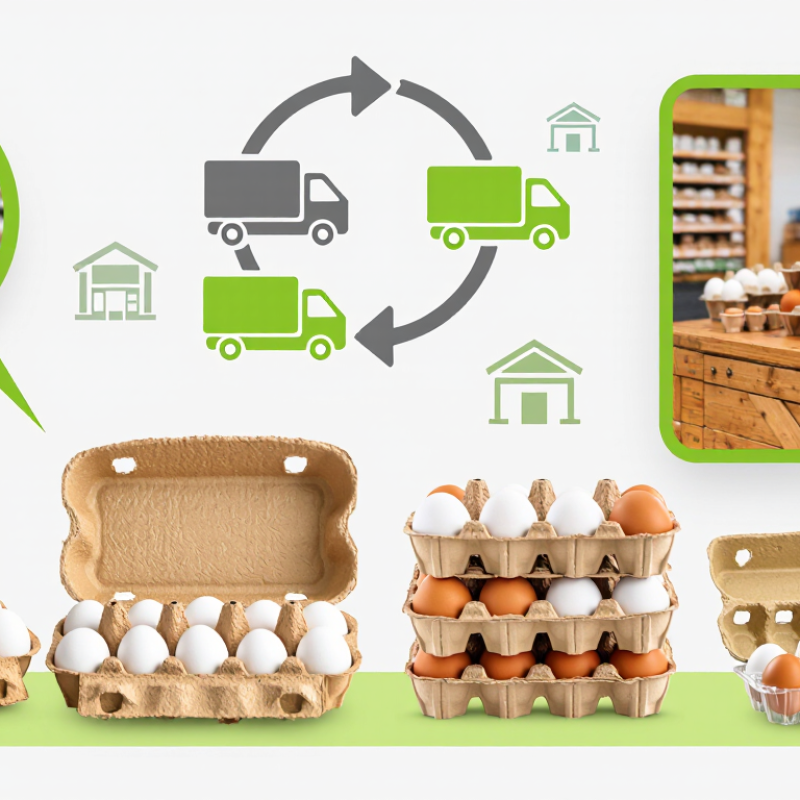
Define Egg Size and Sales Unit: USDA Dozen Weights Span 15–30 oz
Choosing an egg carton starts with the product’s selling unit, not its color or handle. In the United States, eggs are commonly sold by the dozen, but “dozen” does not mean every carton weighs the same. USDA Agricultural Marketing Service standards set minimum net weights from 15 to 30 ounces per dozen.
The six USDA size categories are clear: Peewee requires 15 ounces, Small 18, Medium 21, Large 24, Extra Large 27, and Jumbo 30. These figures come from the United States Standards, Grades, and Weight Classes for Shell Eggs and the USDA Shell Egg Grading Manual. A Large carton, for example, must hold at least 24 ounces of eggs, excluding packaging. That difference affects carton strength, internal spacing, and shipping calculations.
Match the carton to the declared size. A loose fit can cause cracked shells during delivery. A tight fit may press against the lid. Test several filled cartons, not just one sample. Measure the eggs after refrigeration, because cold shells and moisture can change handling slightly. This is easy to overlook.
For mixed-size sales, avoid relying on appearance alone. Record the dozen weight, egg count, closure performance, and pallet load. USDA weight classes are minimums, not promises of identical egg dimensions. A carton designed around average eggs may fail with unusually broad shells. Recheck it. Small testing errors become expensive at scale.
USDA Egg Size Classes: Minimum Net Weight per Dozen
Egg size is defined by the minimum net weight of a dozen eggs. USDA weight classes range from Peewee at 15 oz to Jumbo at 30 oz per dozen. These values can help businesses select carton specifications and clearly define their sales units.
Match Carton Capacity to Your SKU: Compare 6-, 12-, and 18-Egg Formats
Choosing carton capacity starts with your SKU, not the carton supplier’s catalog. A six-egg carton suits small households, premium assortments, and short shopping trips. Its compact footprint can reduce shelf crowding and simplify hand carrying. Fit matters. However, fewer eggs mean more cartons per case and more labels to manage. In my packing trials, this format also needed careful nesting to prevent shifting during delivery.
A 12-egg carton remains the practical middle ground for steady retail volume. It fits common household purchasing habits and uses shelf space efficiently. Check the internal cup depth, divider strength, and lid clearance with your actual egg size. Two eggs can crack when a lid closes too tightly. That detail is easy to miss. Test filled cartons after vibration, stacking, and a warm-to-cool temperature change. Packaging performance often changes outside the packing room.
An 18-egg carton works well for larger households, food-service buyers, and high-throughput sales. It can lower carton use per egg, but its weight may increase handling strain and damage risk. Weight matters. Measure case dimensions before committing to this SKU. A carton that fits the shelf may fail on a delivery pallet. Compare fill speed, rejected eggs, storage density, and customer carry comfort. My own early preference for maximum capacity was not always right; slower handling erased some material savings. Record the results over several production days, because one smooth shift can hide a weak packaging choice.
How to Choose the Right Egg Carton for Your Business? — Match Carton Capacity to Your SKU: Compare 6-, 12-, and 18-Egg Formats
| Comparison factor | 6-egg carton | 12-egg carton | 18-egg carton |
|---|---|---|---|
| Egg capacity | 6 eggs | 12 eggs | 18 eggs |
| Typical carton dimensions* | About 6.5 × 4.5 × 2.5 in | About 11.5 × 4.5 × 2.5 in | About 11.5 × 6 × 3 in |
| Good fit for | Small households, trial purchases, specialty or premium assortments | Everyday retail SKUs and standard household shopping | Larger households, value-oriented packs, and frequent-use customers |
| Shelf-space profile | Compact; useful when shelf width or display space is limited | Moderate; familiar footprint for many retail egg shelves | Larger footprint; check shelf depth and display capacity |
| Pack-price positioning | Lower total checkout price; price per egg may be higher | Balanced pack size and total purchase price | Higher total checkout price; can support a lower price per egg |
| Potential business advantage | Can encourage first-time trial and provide a smaller purchase option | Broad appeal and straightforward replenishment planning | More eggs per pack can reduce the number of packs handled per unit volume sold |
| Before selecting | Confirm demand for smaller packs and whether the unit economics work. | Match the pack to your target customer, pricing, and shelf plan. | Check customer demand, carton fit, case configuration, and shelf dimensions. |
*Dimensions are approximate examples for common carton formats; actual measurements vary by carton design, material, and egg size. Confirm the specifications with your packaging supplier and measure the intended shelf or shipping case before ordering.
Choose Carton Material: Balance Protection Across Pulp, PET, and Foam
Choosing the right egg carton begins with the material, not the printed design. In daily packing operations, I have seen small material choices affect breakage, storage, and customer trust. Pulp cartons offer a firm, textured surface and absorb minor impacts well. They also suit businesses seeking a paper-based option. However, pulp can soften in humid storage rooms. A damp carton may lose its shape.
PET cartons provide clear visibility, which helps staff inspect shells before shipping. Their smooth structure resists moisture and supports clean presentation. PET can also stack neatly when its design is well matched to the egg size. Still, transparency does not guarantee strength. Thin sections may crack under pressure, especially during rough handling.
Foam cartons are lightweight and cushion eggs effectively during transport. They can reduce vibration when cartons move across uneven roads. Their limitation is often environmental perception and local recycling access. Businesses should check available collection systems before choosing this material. Cost, storage temperature, stacking height, and packing speed also deserve practical testing. A carton that performs well in a sample room may fail in a busy warehouse. I once underestimated condensation during early-morning deliveries, and the results were disappointing. Small trials can reveal problems before large orders arrive. No material is perfect. The best choice balances protection, handling conditions, customer expectations, and responsible disposal options.
Check Packing-Line Fit: Verify Carton Dimensions, Closure, and Case Count
How to Choose the Right Egg Carton for Your Business?
A carton may fit the eggs but still fail on the packing line. I have seen small dimension differences create repeated jams near the closing station. Measure the carton length, width, height, and hinge position against the machine guides. Check how the lid opens, folds, and locks at operating speed. A closure that feels secure by hand may loosen during vibration.
Run several cases, not just one carton. Watch for cracked corners, uneven stacks, and sensors that miss the lid edge. These details reveal problems that a product sheet may not show.
Case count also affects performance beyond the machine. Confirm how many cartons fit each case without crushing the top layer. Review the case dimensions against conveyors, pallet patterns, and storage racks. Ask whether workers can lift a full case safely and consistently.
An incorrect count can leave empty space, increase movement, and raise shipping costs. Test the carton with real eggs, normal line speed, and your planned case materials. Slow testing is useful, but it can hide practical faults. I once underestimated closure pressure because the trial used a clean, dry line. Production conditions were less forgiving. A repeat test with dust, temperature changes, and full cases provides more dependable evidence.
Confirm Market Requirements: Include Egg Size, Grade, and Handling Details
How to Choose the Right Egg Carton for Your Business?
Choosing an egg carton starts with market requirements, not appearance. Confirm the egg size before reviewing carton dimensions. Medium eggs may shift inside cartons designed for extra-large eggs. That movement can cause cracks during delivery. Fit matters.
Test a filled carton by gently turning it upside down. The eggs should remain separated and stable.
Grade requirements also influence carton design and labeling space. Different markets may classify eggs by weight, quality, or production method. Confirm current requirements with local authorities and experienced distributors.
A clear label should show size, grade, quantity, packing date, and handling instructions when required.
Avoid guessing. Small labeling errors can delay shipments or confuse buyers.
Handling conditions deserve practical testing.
A carton for supermarket shelves may differ from one used for wholesale transport. Check stacking strength, lid security, moisture resistance, and ventilation.
Place filled cartons on a pallet and simulate ordinary loading movement.
I once focused too much on carton price and overlooked weak corner support. The cartons looked fine, but several cracked eggs appeared after transport. That mistake changed my testing process.
Now, I compare samples after vibration, cold storage, and repeated handling. Ask warehouse staff for feedback, because they notice problems that product specifications may miss.
Related Posts
-
Top Egg Carton Manufacturers in 2026 What Buyers Should Know
-

How to Import Egg Cartons for Your Packaging Needs?
-

10 Creative Tips for Upcycling Egg Cartons at Home
-

10 Essential Tips for Choosing the Best Egg Carton Manufacturers
-

How to Choose Reliable Egg Carton Manufacturers Worldwide?
-

Top Quality Egg Cartons for Global Buyers How to Choose?