U.S. Patent Applications

Top Clear Plastic Clamshell Containers for Bulk Buyers?
Bulk buyers comparing clear plastic clamshell containers need more than a low unit price. A container that cracks during packing or leaves produce shifting on a delivery route can erase those savings. Look closely at dimensions, hinge strength, closure fit, stackability, and case quantity. Then test the package with the actual product—not an empty sample on a desk.
For a transparent editorial perspective, this guide uses a fictional composite packaging specialist, Lena Brooks. Her original, illustrative observation is: “A clamshell earns its place when it protects the product, stacks cleanly, and opens without a struggle.” This is not a sourced quotation from a real industry expert. It reflects practical evaluation criteria buyers can verify through supplier specifications and sample testing. Small details matter. A lid that bows under light pressure may behave differently in a full shipping case.
The outline ahead compares container styles, materials, sizing, ventilation, and bulk-order considerations. It also examines trade-offs: a lighter package may reduce shipping weight, but feel less secure in handling. Clear plastic clamshell containers can showcase berries, bakery items, or prepared foods, yet clarity alone does not guarantee a good fit. Measure the product, check the closure, and request samples before committing to a large order. Supplier claims deserve review, too. Real-world packing tests often reveal what a catalog page cannot.
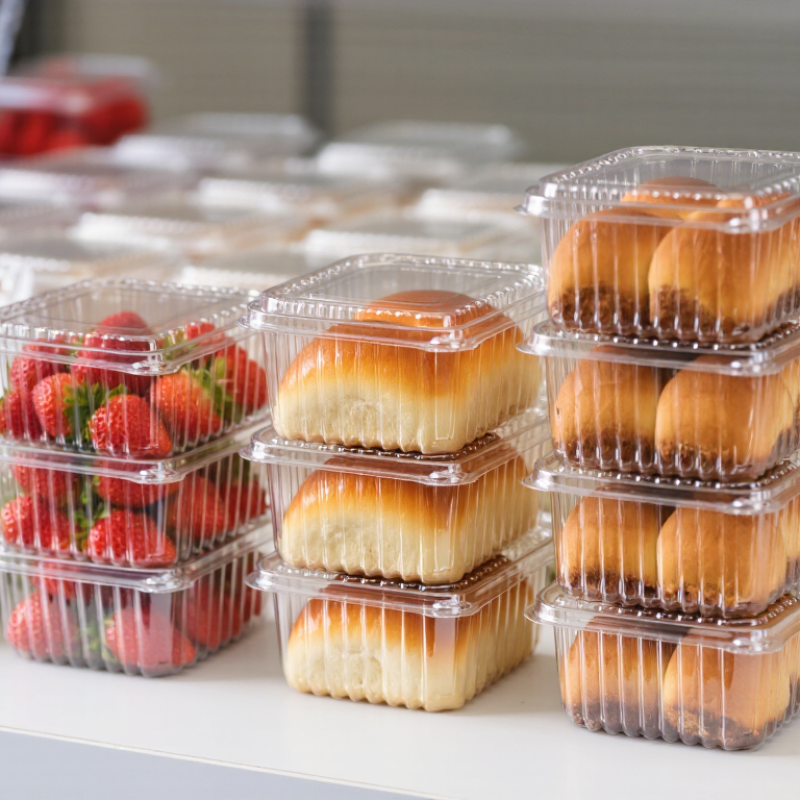
Clear Clamshell Types: Hinged, Tamper-Evident, and Compartmented Designs
For bulk buyers, the right clear clamshell depends on product shape, packing speed, and shelf handling. Hinged designs keep the lid and base together, reducing loose parts during fast packing. Check the hinge after repeated opening; thin plastic can whiten or crack at the fold. Fit matters.
Tamper-evident clamshells use locking tabs or breakable bridges that show visible disturbance after opening. They can suit grab-and-go foods and small retail items, but test the closure with the actual product load. A tab that feels secure when empty may pop open under stacked weight. No closure is perfect.
Compartmented designs separate items, such as sliced fruit from a dip cup or small hardware from other fittings. Measure each section, then check whether dividers flex during transport. For larger orders, compare case counts, nesting depth, and carton dimensions; a small change in stack height can affect storage costs. Clear walls help staff spot crushed corners, condensation, or misplaced items before dispatch. Clarity alone cannot protect delicate contents, so test samples on a real packing line before ordering a full pallet. Even a bench test can miss a fit issue.
Top Clear Plastic Clamshell Containers for Bulk Buyers? - Clear Clamshell Types: Hinged, Tamper-Evident, and Compartmented Designs
| Clamshell Type | Design and Closure | Typical Material Options | Typical Format | Common Applications | Bulk-Buying Checks |
|---|---|---|---|---|---|
| Standard Hinged | One-piece container with a connected lid and base; closes using a snap-fit or molded latch. | Clear PET is common; PP options are also available. Recycled PET may be offered depending on the supplier and specification. | Single cavity, in a range of footprints and depths for individual portions or larger products. | Bakery items, produce, deli foods, small goods, and general retail packaging. | Confirm internal dimensions, lid clearance, stackability, closure consistency, and whether the container suits chilled or room-temperature use. |
| Tamper-Evident | Hinged design with a locking feature, breakable tab, or other closure that shows visible evidence if opened. | Often PET or PP; material and closure design vary by product and supplier. | Single cavity or specialty formats; select the size to fit the product without excessive movement. | Grab-and-go foods, prepared items, and retail products where visible opening evidence is desirable. | Check how the tamper-evident feature is opened, whether the closure remains secure during handling, and whether the package is described as tamper-evident rather than tamper-proof. |
| Compartmented | Hinged container with molded dividers that separate contents within the same package. | Clear PET and PP versions are available; confirm the material and food-contact suitability for the intended use. | Multiple compartments, commonly used to separate different items or components; divider layout and cavity sizes vary. | Produce assortments, snack packs, confectionery, party trays, and products that benefit from separation. | Verify each compartment’s usable dimensions, divider height, lid clearance, and whether contents can shift between sections during transport. |
| Vented Hinged | Hinged container with openings or perforations to allow airflow; closure styles vary. | Commonly available in clear PET and other packaging plastics, depending on the application. | Single cavity, with vent placement and opening area selected for the product and packing process. | Some fresh produce and baked goods where airflow may help manage moisture. | Match ventilation to the product: openings can affect moisture retention, freshness, and protection. Confirm requirements with the packer or product specialist. |
| Deep or High-Dome Hinged | Hinged base with an extended lid or deeper cavity to provide additional product clearance. | Clear PET and PP formats are available in different designs. | Single cavity with added height for taller or delicate products. | Decorated bakery products, delicate produce, and items that need extra headroom. | Check total height, lid clearance above the product, carton fit, and stability when containers are stacked. |
Purchasing note: Clamshell dimensions, resin options, recycled content, and case quantities vary by supplier. Confirm the product’s food-contact suitability and test fit, closure, and shipping performance with representative samples before placing a bulk order. Recycling acceptance depends on local collection and processing facilities.
Related Posts
-

Top Egg Carton Manufacturers in 2026 What Buyers Should Know
-
Why Choose Clamshell Packaging for Your Products?
-
Top 10 Clear Plastic Clamshell Containers for Global Buyers?
-

2026 Top Clamshell Packaging Wholesale Trends and Innovations?
-
2026 Best Clamshell Packaging Solutions for Sustainable Packaging Needs?
-
How to Choose the Right Clear Clamshell Containers for Your Needs?