U.S. Patent Applications
How to Choose the Right Egg Carton for Global Sourcing?
Choosing the right egg carton for global sourcing is a supply-chain decision, not merely a packaging purchase. The carton must protect fragile shells during stacking, vibration, humidity, and long-distance transport. It must also suit local filling equipment, recycling systems, labeling rules, and customer expectations.
FAOSTAT reported global egg production above 90 million tonnes in recent years. That scale creates enormous packaging demand. The OECD-FAO Agricultural Outlook 2024–2033 also expects continued growth in poultry production and consumption, especially in emerging markets. Meanwhile, Smithers identifies sustainability, material efficiency, and recycling performance as major forces shaping packaging procurement. These reports point to a practical truth: one carton design rarely works everywhere.
Material choice matters. Molded fiber offers a familiar renewable image and can absorb minor impacts. Recycled plastic usually provides stronger moisture resistance and consistent dimensions. However, neither option is automatically superior. A wet fiber carton may weaken during refrigerated transport. A plastic carton may face stricter recycling expectations in the destination market.
Andrew Joret, a former British Egg Industry Council chairman, has stressed that “food safety is paramount throughout the egg supply chain.” That principle should guide every sourcing decision. Inspect the carton beside a real pallet, not only on a supplier’s sample table. Check compression strength, ventilation, fit, odor, cleanliness, and traceability records.
Small details matter.
A carton that saves one cent may create more breakage, returns, and waste. Buyers should compare total delivered cost, not unit price alone. The imperfect part is unavoidable: supplier data can look excellent until weather, handling, or machinery exposes its weaknesses. A reliable sourcing process tests those weaknesses before committing to volume.
Understanding Egg Carton Types and Their Global Applications
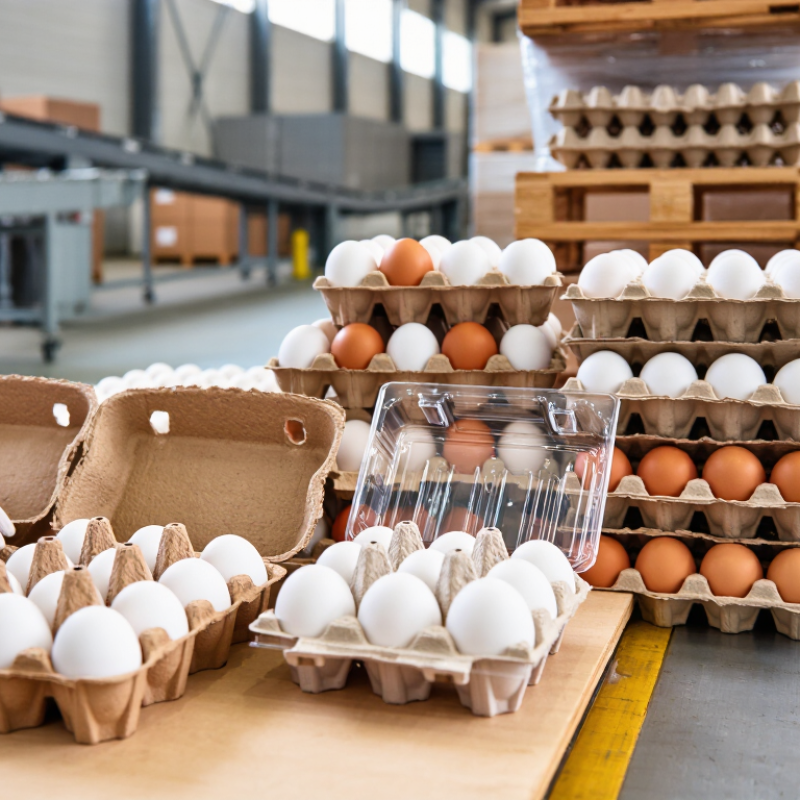
Egg cartons are not interchangeable across global markets. Their material, shape, ventilation, and stacking strength affect freshness and transport. Molded fiber cartons suit buyers seeking recyclable packaging and moderate protection. Clear plastic cartons show the eggs, but recycling expectations vary by destination. Foam cartons protect well against impact and temperature changes, yet some regions restrict their use. These differences matter before releasing a purchase order. Good sourcing starts with the destination, not the catalog photo.
For refrigerated sea freight, I check compression strength, moisture resistance, and pallet stability. A carton that performs well in a dry warehouse may soften during humid transit. Small details matter. Ask for sample cartons filled with the intended egg size. Test closing tabs, label adhesion, and stacking at the planned height. Producers should confirm carton dimensions against existing trays, cases, and container layouts. A few millimeters can create costly empty space.
Global applications vary by sales channel. Retail cartons need clean printing, tamper evidence, and easy shelf handling. Food-service buyers often prioritize nesting, fast packing, and consistent dimensions. Export cartons may require stronger dividers and outer cases for longer routes. I have seen teams select the cheapest unit, then discover broken corners after loading. That choice was not entirely wrong, but the test was too narrow. Suppliers should document material composition, recycled content, moisture limits, and quality checks. Specifications can still miss real conditions, so pilot shipments deserve attention.
Assessing Egg Protection, Materials, and Packaging Performance
How to Choose the Right Egg Carton for Global Sourcing?
Egg protection should guide every packaging decision. During sourcing projects, I have seen attractive cartons fail after long transport. The weak points were usually cracked corners, loose lids, or poor internal spacing. A suitable carton should hold each egg firmly without creating pressure marks. Check compression strength, drop resistance, vibration performance, and stacking stability. Fit matters. The carton must also tolerate humidity changes during storage and shipping. A dry warehouse test is not enough.
Material selection affects both protection and packaging performance. Molded fiber can provide cushioning and efficient nesting, while plastic options may offer better moisture resistance. However, neither material is automatically superior. Review wall thickness, hinge durability, ventilation, recyclability, and food-contact suitability. Ask suppliers for documented test results, production tolerances, and sample batches. Inspect the samples yourself. Small variations can become costly at scale. A carton that performs well in one climate may weaken in another. This is where sourcing teams must question their assumptions.
Tips: Test filled cartons, not empty ones. Simulate stacking for the expected shipping duration. Add vibration and repeated handling tests. Measure breakage after each test. Compare results across several production batches. Keep photographs and inspection records for traceability. Do not rely only on a supplier’s laboratory report. Independent verification is safer when the shipment value is high. Also, assess pallet efficiency, carton weight, storage space, and disposal practices. The cheapest carton may increase losses through breakage. That lesson is easy to miss.
Comparing Supplier Standards, Certifications, and Production Capacity
How to Choose the Right Egg Carton for Global Sourcing?
Supplier standards deserve more attention than carton appearance. FAOSTAT data indicate that global egg production exceeded 90 million tonnes in 2022. That scale demands stable packaging supply, not attractive samples alone. Ask suppliers for documented quality procedures, incoming-material checks, and batch traceability. ISO’s 2023 Survey recorded more than 1.26 million ISO 9001 certificates worldwide. Certification helps, but it does not guarantee careful production. Request recent audit findings and corrective-action records.
Look for food-contact compliance in the destination market, supported by current laboratory reports. For paper-based cartons, a valid forest chain-of-custody certification can clarify fiber sourcing. Environmental claims need evidence, including recycled content percentages and wastewater controls. Do not accept vague wording. It can hide weak controls. Production capacity should be measured in usable cartons per hour, not theoretical machine speed. Check the number of operating lines, mold-change time, reject rates, maintenance records, and backup power. A supplier producing 500,000 cartons daily may still fail during seasonal demand.
I would also test compression strength after humidity exposure. Egg cartons may cross climates before reaching a warehouse. The 2024 UN Food Waste Index reported 1.05 billion tonnes of food waste in 2022, although it does not isolate packaging-related losses.
Better protection can reduce avoidable damage, but the relationship is not automatic. Compare pilot shipments, pallet stability, delivery consistency, and response time to defects. Capacity claims are easy. Proving repeatability is harder.
Evaluating Costs, Shipping Requirements, and Sustainability Factors
Choose an egg carton by landed performance, not unit price alone. Compare carton cost, tooling, minimum order quantity, freight, duties, and expected breakage. For sea shipments, calculate cubic meters per pallet and container, then test stack strength. UNCTAD’s Review of Maritime Transport reports that over 80% of global merchandise trade by volume moves by sea. A low-cost carton can become expensive when crushed corners create rejected eggs.
UNEP’s Food Waste Index Report 2024 estimates that 1.05 billion tonnes of food were wasted in 2022. That figure makes protection a sustainability issue, not merely a quality concern. Paper pulp often offers strong recyclability where collection systems exist. However, humid climates may require coatings, which can complicate fiber recovery. Plastic cartons can resist moisture and reduce weight, but their end-of-life depends heavily on local infrastructure. The World Bank’s What a Waste 2.0 projected global waste could reach 3.40 billion tonnes annually by 2050. Regional disposal realities matter. Material choices are rarely perfect.
Tips: Request evidence for recycled content, food-contact compliance, moisture resistance, and drop-test results. Test cartons with representative eggs under humid conditions. ISTA-style distribution testing can reveal failures before a full container ships. Supplier data may be self-reported. Audit samples independently when order volumes justify it.
Selecting the Best Egg Carton for Your Target Market
Choosing an egg carton for a target market starts with the shopper, not the factory. A six-egg pack may suit small households. A larger pack can serve restaurants and busy families. Check common egg sizes, shelf dimensions, and buying habits before requesting samples. In humid regions, moisture resistance matters. In colder areas, compression strength may matter more during long transport. Small details affect breakage, waste, and repeat orders.
Material should match the market’s expectations and supply conditions. Molded fiber offers a familiar paper feel and can support recyclable packaging goals. Plastic may provide clearer visibility and stronger moisture protection, but some buyers may reject it. Ask local distributors what customers actually accept. Do not rely on online assumptions. In one trial, a carton fit the eggs well but failed on a narrow retail shelf. The design looked practical. It was not practical enough.
Request samples filled with the exact egg size. Test stacking, vibration, humidity, opening force, and barcode readability. Confirm food-contact suitability and required labeling with qualified local advisers. Packaging rules differ between destinations, and translated text can still be confusing. Review drop-test results with your logistics team. A cheaper carton is not cheaper after cracked eggs and customer complaints. I would also leave room for improvement. Market feedback may expose weak hinges, noisy closures, or excessive material. Adjust the carton after real shipments, not only after a meeting.
Related Posts
-
Top Egg Carton Manufacturers in 2026 What Buyers Should Know
-
How to Choose the Right Egg Carton for Your Business?
-
10 Creative Tips for Upcycling Egg Cartons at Home
-

2026 How to Choose the Best Clamshell Boxes for Your Packaging Needs?
-

2026 Top Trends in Clamshell Packaging UK What You Need to Know
-
How to Choose the Best Fruit Packaging for Freshness and Sustainability